Do You Need to Put Made in China on Your Product? Australian Labelling Rules
A container can be held at the wharf over a label. Here is what Australian law actually requires on an imported product, which goods are caught, and how to get it into the factory brief.
Your container can be held at the wharf over a label.
Not the product. Not the paperwork. The label.
Certain goods cannot be imported into Australia unless they carry a trade description, and a trade description has to say where the goods were made. Get it wrong and the goods can be seized. Get it half right and you are paying someone to relabel five thousand units by hand in a licensed depot while your launch date moves.
It is a decision you make in the factory brief, months before any of that happens.
Do you have to put the country of origin on your product?
Sometimes. Not always, and founders get this wrong in both directions.
Australia does not require every imported product to carry a country of origin marking. It requires one for prescribed goods, a list set out in the Commerce (Imports) Regulations 1940 under the Commerce (Trade Descriptions) Act 1905. If your product is on that list, the marking is a condition of import. If it is not, there is no blanket customs requirement to mark it at all.
Most consumer products founders make are on the list.
Which products are prescribed goods?
The list is long and oddly specific, because it has been amended for more than eighty years. The categories that catch most product businesses are these.
- Clothing, apparel and textile articles
- Footwear
- Jewellery
- Watches and clocks
- Toys
- Ceramic ware
- Leather goods
- Electrical appliances and fittings
- Food and beverages
- Medicines and medicinal preparations
- Goods packed ready for sale to the public
That last category does a lot of work. Goods packed ready for retail sale are prescribed in their own right, which pulls in a large amount of product that is not named anywhere else on the list. If your product leaves the factory inside its own retail box, assume you are in.
Do not guess your way through this. Your customs broker can confirm it in an email, checked against your tariff classification. Getting that classification right is a separate job worth doing properly, and we covered it in HS Codes Explained.
What does a trade description have to say?
Two things. The country in which the goods were made or produced, and a true description of the goods themselves.
The form is prescribed as well.
- In English
- In prominent and legible characters
- On a principal label or brand, affixed in a prominent position
- Applied in as permanent a manner as practicable
- Readily accessible to the purchaser
Readily accessible is the one that fails. A marking printed inside a sealed carton is not accessible to the buyer. Neither is a sticker hidden under a battery cover.
Some categories carry extra rules on top. Footwear has to state the material of the upper, the lining and the sole, in characters not less than 2.5 millimetres high. Ceramic ware has to be marked permanently, by underglaze, etching or indelible print, rather than with a sticker that surrenders in a dishwasher.
Where does the marking actually go?
On the goods, or on the container the goods are sold in.
For most prescribed categories the marking belongs on the article itself or its immediate container. For goods prescribed because they are packed ready for sale, it goes on that retail packaging.
In practice that leaves you three options. Printed or moulded into the product. Woven or heat transferred onto a label. Printed on the retail box or the swing tag.
Each one changes your tooling, your artwork and your unit cost. That is why it belongs in the brief and not in an email three weeks before the container books.
Does this apply if you only sell online?
Yes. The obligation attaches at import, not at the point of sale.
Your sales channel does not change it. A product that needs a trade description needs one whether it goes to a department store, a market stall or straight into a box in your garage.
What happens if the goods arrive unmarked?
Goods imported contrary to the legislation may be forfeited to the Crown. That is the legal position and it is worth reading twice.
In practice the goods are usually held rather than destroyed, and you are given a chance to fix them. Fixing them means moving the container to a licensed depot, opening every carton, applying compliant labels, repacking and presenting the goods again.
Illustrative numbers, but the shape is real. On a single full container that work has landed between four and eight thousand dollars, plus storage charged by the day, plus the six weeks you were going to spend selling.
The marking would have cost about nine cents a unit at the factory.
Can you say Designed in Australia?
Yes, if it is true, and if it does not bury the part that matters.
The customs rule is simple. Additional information on the label must not contradict or obscure the trade description. Designed in Australia sitting beside Made in China in the same field of view is fine. Designed in Australia across the front of the box, with the country of origin in four point type on the underside of the base, is the version that gets you a letter.
The Australian Consumer Law runs alongside that, and it covers what you claim in your marketing as well as what you print on the label. Made in Australia has a legal test. The goods have to have been substantially transformed in Australia, meaning they came out fundamentally different in identity, nature or essential character from the imported inputs. Assembling imported components rarely clears that bar. Product of Australia is stricter again.
Designing a product here and manufacturing it overseas is normal and legal. Describing that product as Australian made is not.
How hard you lean on where your product is made is a positioning decision rather than a compliance one. Kristy covers that side in How to Build a Brand Story That Sells on kristywithers.co.
Getting it into the factory brief
Country of origin marking fails for one reason more than any other. Nobody specified it, so the factory used its default, and the default is nothing.
A factory will not add a marking you did not ask for. It has no reason to, and no obligation to know your market.
Put it in writing at brief stage, with the same specificity you would use for a colour.
- The exact wording, with the country name spelled out in full
- Where it sits, marked on the artwork or the dieline rather than described
- The method. Printed, woven, moulded, etched, engraved or a permanent label
- The minimum character height
- Whether the marking has to survive washing, dishwashing, sunlight or normal wear
Then check it twice. Once on the golden sample, where you confirm the wording and the placement. Once at pre-shipment inspection, where you confirm the run carries what the sample carried.
Sample approval and bulk production are two different events. Markings are one of the first things that quietly change between them.
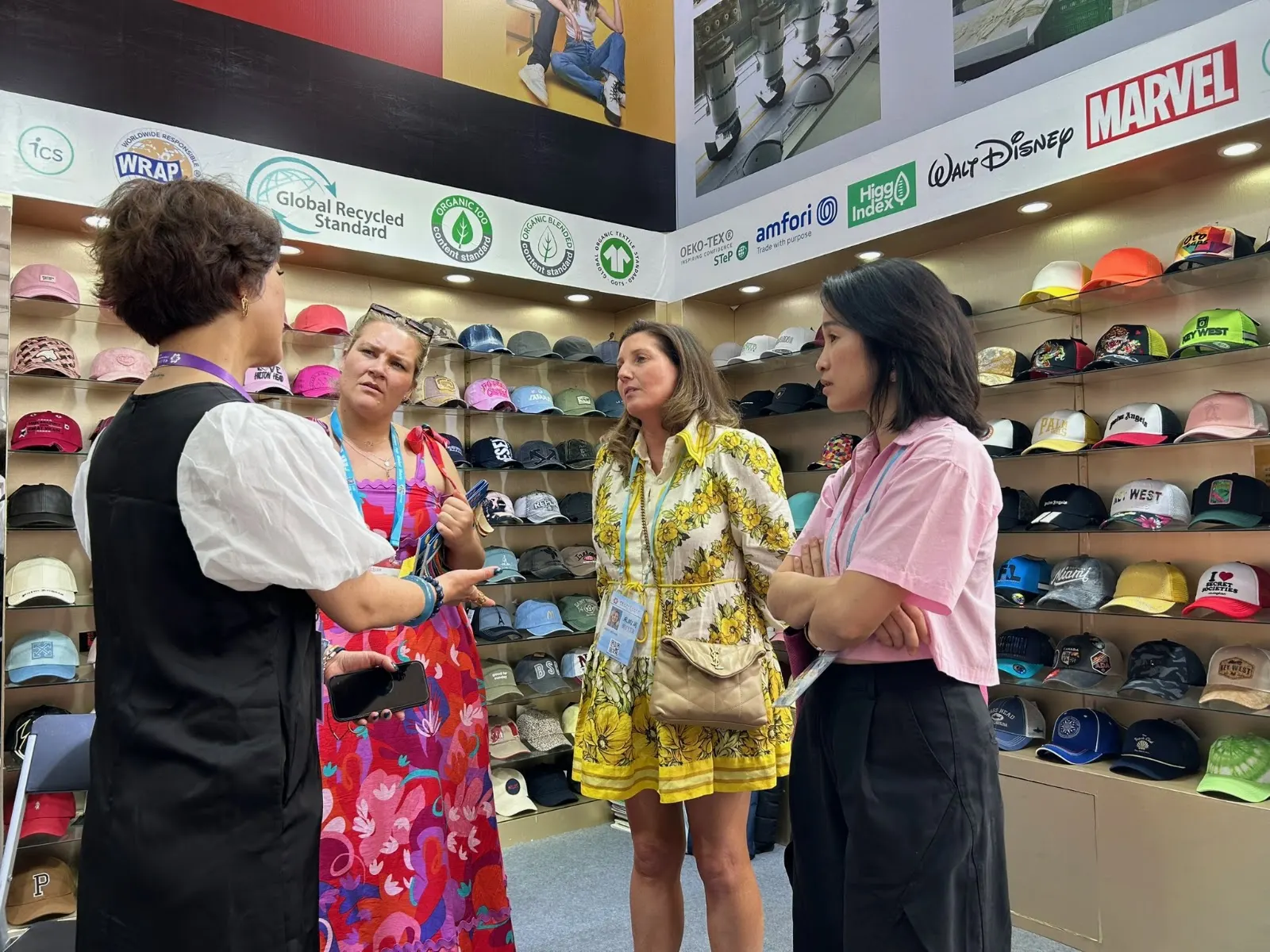
If you are meeting factories in person in October at Canton Fair Phases Two and Three, ask to see marked production samples on the stand rather than the unmarked showpieces. What a supplier hands you at a fair is chosen to look good, not to clear customs.
A checklist before you approve artwork
- Confirm whether your product is prescribed. Ask your customs broker in writing, against your tariff classification.
- Decide where the marking lives. The product, the immediate container or the retail box.
- Write the exact wording. Country of origin plus a true description of the goods.
- Mark it on the dieline and the tech pack, not just in an email.
- Specify the method and the minimum character height.
- Check that nothing else on the label contradicts or obscures it.
- Verify it on the golden sample before you approve production.
- Add it to the pre-shipment inspection checklist as a named line item.
The takeaway
Country of origin marking is a nine cent decision that turns into a five figure problem at the wharf.
It is not complicated. It is easy to leave out, because it sits between the person designing the packaging and the person booking the freight, and neither of them owns it.
You do.
If you want someone to check your labelling requirements, your artwork and your factory brief before the run goes ahead, book a sourcing call. We will tell you honestly what to check.
Related reading: Product Compliance and Safety Testing for the standards side of labelling, How to Source Custom Packaging Overseas for getting the artwork right the first time, and How to Import Products Into Australia for the wider clearance process.
Frequently asked questions
Do all imported products need a country of origin label in Australia?
No. The requirement applies to prescribed goods listed in the Commerce (Imports) Regulations 1940. That list covers most consumer categories, including clothing, footwear, jewellery, toys, ceramics, leather goods, electrical appliances and any goods packed ready for sale to the public. Check your product against the list with your customs broker before you brief a factory.
What has to appear in a trade description?
The country in which the goods were made or produced, and a true description of the goods. It must be in English, in prominent and legible characters, on a principal label affixed in a prominent position, applied as permanently as practicable, and readily accessible to the purchaser.
What happens if goods arrive in Australia without the required marking?
Goods imported contrary to the legislation may be forfeited to the Crown. In practice they are usually held while you relabel them at a licensed depot, which costs thousands of dollars per container plus daily storage and lost selling time.
Can you write Designed in Australia on a product made in China?
Yes, if it is true and it does not contradict or obscure the country of origin marking. You cannot describe the product as Made in Australia unless it was substantially transformed here, which assembling imported components rarely satisfies.

Kristy Withers
Founder of Source Haus. 20+ years in product sourcing and manufacturing across China, India and Southeast Asia.