How to Find a Manufacturer for a Wearable Tech Product (When It Is Also Jewellery)
You will not find one factory that does jewellery and electronics well. You will find two, and then decide who owns final assembly. Here is what that decision costs, and the eight things to sort before you place a bulk order.
Short answer: you will not find one factory that does both well. You find a lead factory that owns the finished product, a second supplier that owns the electronics, and then you decide, in writing, which one carries assembly and which one eats the yield loss. That single decision does more to determine whether the project works than any price you negotiate.
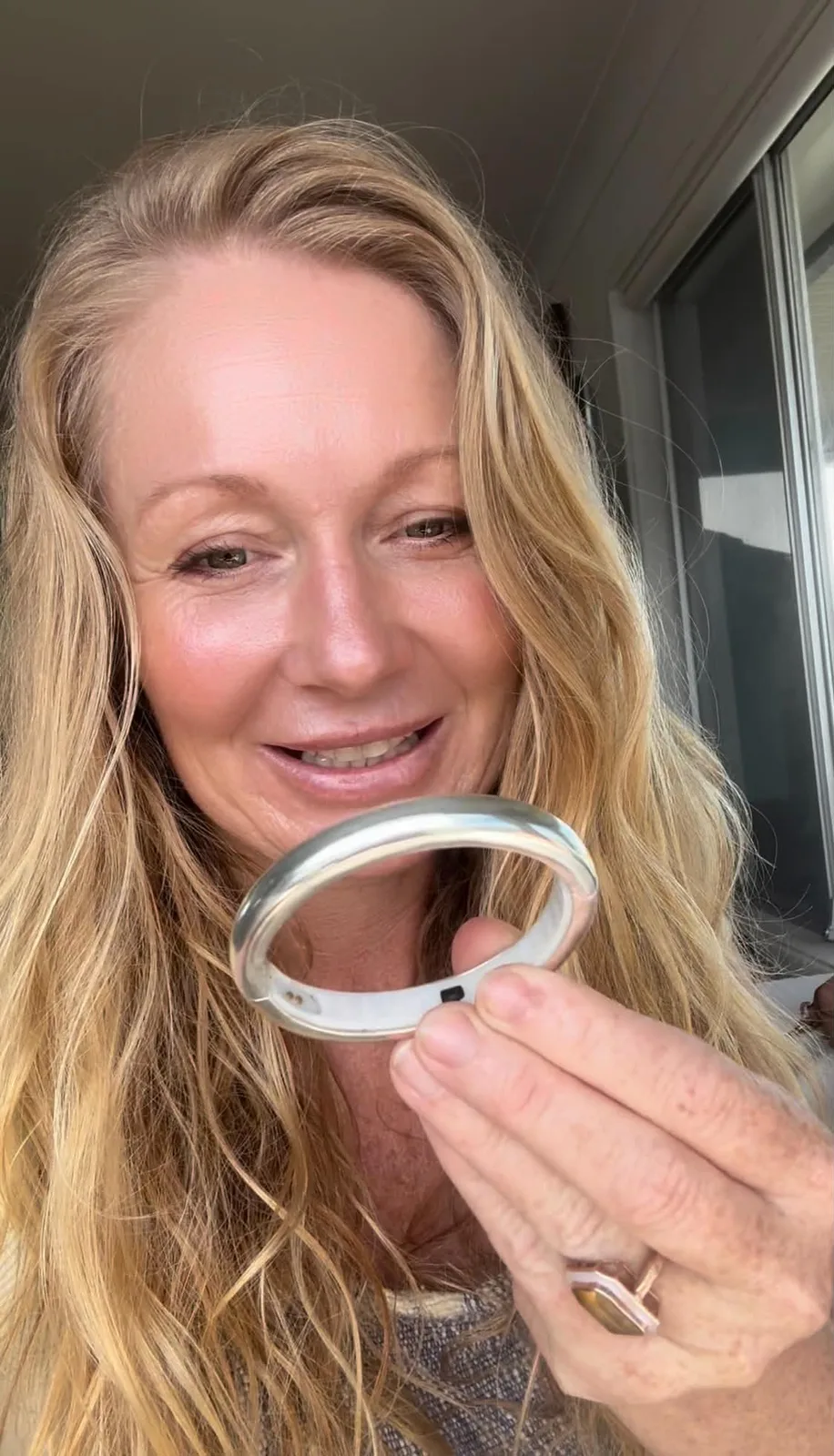
Source Haus sourced Halo by Halotech for its founder, Kasey. Jewellery with a hidden button. One press sends an SOS text with your live location to five people you have chosen and saved in the app. It took 14 months of back and forth before she held a fully working prototype. That is not a story about a slow founder. For a product that is two categories at once, 14 months is a realistic number, and most of it goes on problems nobody warns you about.
Kasey's own story sits on Kristy Withers: Founder Love: Kasey, Founder of Halo. This piece is the manufacturing side of the same product.
Why is it so hard to find a manufacturer for smart jewellery?
Because jewellery factories do jewellery and electronics factories do electronics, and the overlap is thin.
Search "smart jewellery manufacturer" and you will get pages of suppliers who say they do both. Most of them mean one of two things. Either they are an electronics factory that will subcontract the metalwork, or they are a jewellery house that will buy a finished module off the shelf. Neither is wrong. What is wrong is not knowing which one you are dealing with, because it changes who you can hold responsible when a unit fails.
Ask one question early and ask it plainly: which parts of this do you make in your own building, and which parts leave the building? A supplier who answers that clearly is worth more than one who quotes 15% cheaper. The same logic applies to any product. We wrote about it here: How to Vet a Factory Before You Pay a Deposit.
Underneath the supplier question sit five real problems.
- Two sets of tolerances. Jewellery is finished to what the eye and the hand accept. Electronics is finished to a dimension on a drawing. A cavity that is 0.3mm out is invisible in a ring and fatal to a module that has to sit in it.
- Two sets of compliance. The metal has one regime. The battery and the radio have another. They rarely share a lab.
- Materials that fight each other. Soldering heat, plating chemistry, adhesives and a seal that has to survive daily wear. Each one is fine alone. Together they are a scheduling problem.
- MOQs that do not match. Covered below. This is the one that costs founders the most cash.
- Sampling that is really two sampling cycles. Every round is a mechanical round and an electronic round, and they do not finish on the same day.
Who should own final assembly?
Someone has to physically put the module inside the piece. Decide who before you pay anyone a deposit.
There are three workable structures.
The jewellery factory assembles. The electronics supplier ships finished, tested modules in. This is usually right when the piece is complex to make and the electronics are relatively settled. The jewellery factory becomes your prime contractor. You want them quoting a price that already includes assembly labour and a scrap allowance.
The electronics factory assembles. The jewellery components ship to them. This suits products where the electronics are the hard part and the housing is a machined or cast part they can handle. Watch the finishing quality closely. Electronics assembly lines are clean, but they are not set up to protect a polished surface through a build.
You appoint a third party. A contract assembler, or your sourcing partner, takes both streams and does the marriage. More expensive per unit. Far cleaner accountability, because one party signs off on the finished good.
Whichever you pick, write the yield rule into the purchase order. A worked question: if 1,000 units are assembled and 40 fail final test, who pays for the 40 modules and the 40 jewellery pieces inside them? Left unagreed, the answer is always you. Agreed upfront, a typical split is that each supplier carries defects traceable to their own part, and the assembler carries damage caused during assembly. Put a number on acceptable yield too. Anything below it is the supplier's cost, not yours.
How do you handle two MOQs that do not match?
This is the cash problem, and it is the reason a lot of these products never get made.
A jewellery factory will often run a few hundred pieces per finish. An electronics module supplier is thinking in thousands, because their cost is dominated by setup, firmware and component reels. The gap between those two numbers is your working capital.
Illustrative ranges, not a quote, and not Halo's numbers:
- Jewellery MOQ: 300 to 500 pieces per finish
- Electronics module MOQ: 3,000 to 5,000 units, sometimes 1,000 at a premium of 20% to 40% per unit
- Electronics NRE, meaning firmware, PCB layout and test jigs: US$8,000 to US$25,000
- Tooling for a housing or a cast component: US$3,000 to US$12,000
Four ways to close the gap that actually work. Buy the module MOQ once and stage the jewellery in smaller batches against it, so your finished-goods risk stays small while the module sits as a component. Pay the small-run premium for the first order and treat it as the cost of learning. Design one module across several jewellery styles, so the MOQ spreads over a range instead of one SKU. Or find a supplier already running a similar module for another customer and buy into their existing run.
More on the general version of this: How to Lower Your MOQ. And be clear about who owns the tooling and the firmware before you pay for either: Who Owns the Mould?
How long does sampling take for a wearable product?
Plan for six to ten rounds and three to six weeks per round. That is where 14 months comes from.
A single sample round on a hybrid product is not one event. It is a mechanical sample, an electronics build, a marriage of the two, then a test. Any one of the four can send you back to the start. A firmware fix is quick. A cavity that is the wrong size means new tooling and another six weeks.
Two things shorten it. Split the streams early so mechanical and electronics iterate in parallel rather than in sequence. And sign a golden sample for each stream separately, plus one for the assembled unit, so nobody can argue later about which version was approved. If your samples keep coming back wrong, the cause is usually the brief, not the factory: Why Your Samples Keep Coming Back Wrong.
What testing and compliance do you need before you ship?
More than a jewellery product and more than most founders budget for. Sort it before production starts, not after.
- The radio. A Bluetooth device sold in Australia needs to meet ACMA requirements, including the short range devices standard, EMC and human exposure limits, and it carries the RCM mark. The importer is the supplier in the eyes of the regulator, which means the compliance records are your responsibility, not the factory's. ACMA can ask to see the test reports and the declaration of conformity at any time.
- The same again elsewhere. FCC for the United States. CE under the Radio Equipment Directive for the EU, UKCA for Britain. Budget roughly US$3,000 to US$6,000 for FCC and more for a full RED package.
- The battery. You need a UN 38.3 test summary from the cell manufacturer before anyone will freight it. Ask for it at quotation stage, not at booking.
- The metal. If you sell into the EU or UK, nickel release is regulated and your plating spec has to meet it. Lead and cadmium limits apply in most markets.
- Water and wear. If you claim an IP rating, test to it. A claim on a website is a claim a regulator can hold you to.
The general version: Product Compliance and Safety Testing.
How do you freight a product with a battery in it?
Differently, and it is worth knowing before you build the launch timeline.
A lithium battery inside a product ships as UN3481. From 1 January 2026, under the 67th edition of the IATA Dangerous Goods Regulations, the 30% state of charge cap became mandatory rather than recommended for lithium ion batteries packed with equipment above 2.7Wh. In practice that means your factory has to control charge level at packing, your forwarder needs a dangerous goods declaration, and not every airline or courier will take it.
Sea freight is usually simpler and cheaper for these products, but it adds four to six weeks. Whichever you choose, put the dangerous goods handling fee into your landed cost before you set a retail price: How to Calculate Landed Cost Per Unit.
The checklist, in order
- Write the spec for both halves before you approach anyone. Jewellery drawing, module requirements, and the interface between them.
- Approach jewellery factories and electronics suppliers separately. Do not ask one to find the other for you.
- Ask every supplier what leaves their building.
- Decide who assembles and who carries yield loss. Put it in the PO.
- Get both MOQs and both NRE quotes in writing before you commit to a design.
- Sample the two streams in parallel. Sign three golden samples.
- Book compliance testing in the sampling phase, not after production.
- Get the UN 38.3 summary and confirm your freight route before you place the bulk order.
None of this is a reason not to build the product. Kasey founded a tech company having never owned a computer before the day she decided to build it. Her line is start before you're ready. The point of the list above is that the hard parts of a hybrid product are knowable in advance, and knowing them is what turns 14 months into something you can plan around.
If you are looking at a product like this, the fastest way to find the right suppliers is to be in the room with them. Our India trip is fully booked. China is October, Canton Fair Phases Two and Three, which is the right fair for exactly this kind of product. Book a sourcing call if you want to talk it through.

Kristy Withers
Founder of Source Haus. 20+ years in product sourcing and manufacturing across China, India and Southeast Asia.